Lauren Weedman embraces the freedom of live performance, finding room for the energy and honesty she has always carried with her.
Film & TV • Theater • Performance • 5 Min Read
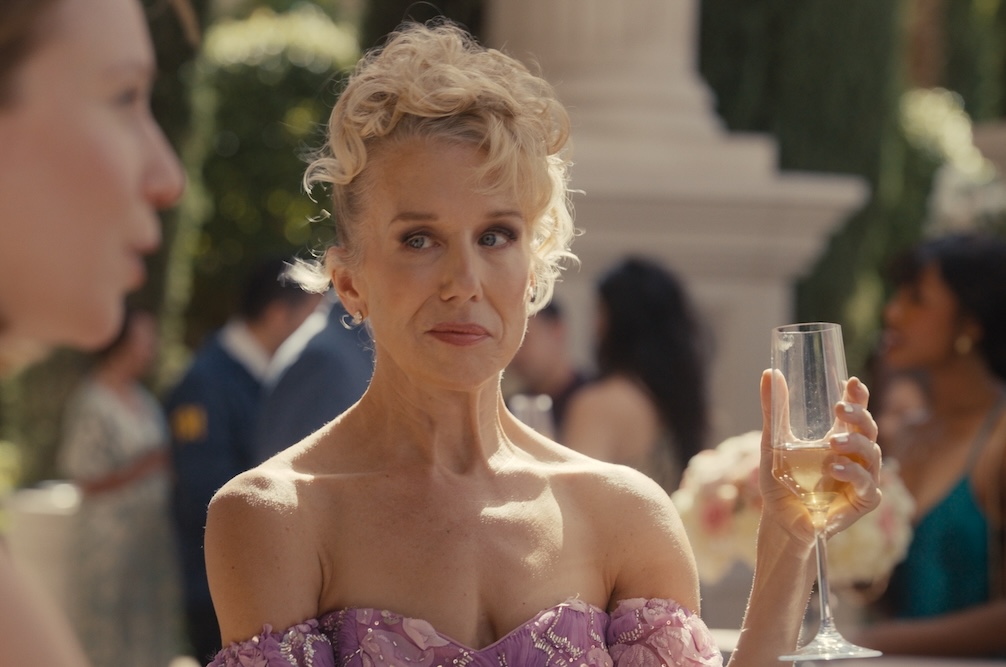
Lauren Weedman brings her singular energy and unfiltered perspective to the stage.
“`htmlLauren Weedman Is Having a Very Lauren Weedman Moment

There is something wonderfully unexpected about Lauren Weedman’s current moment. After more than two decades of working steadily across television, film, theater, writing, and performance, the actress has arrived at one of those rare stretches in a career when several doors seem to open at once.
In 2026, Weedman can be seen in a remarkable collection of acclaimed comedy television, including Hacks and Abbott Elementary, while continuing to build on the momentum of appearances in Nobody Wants This and Wonder Man. Her most visible role remains Mayor Jo Pezzimenti on Hacks, the HBO Max comedy whose fifth and final season made Emmy history with 24 nominations—the most ever received by a comedy series in a single year. Weedman herself received her first Emmy nomination for Outstanding Guest Actress in a Comedy Series for her work as Mayor Jo.
It is an extraordinary recognition for an actress whose career has never depended on being the obvious center of the frame. Weedman’s gift has always been different. She enters a scene with the confidence of someone who understands that comedy is often hiding in the smallest human detail: an expression, an uncomfortable pause, a strange sentence delivered with complete conviction.
That devotion became especially important after a sudden medical diagnosis threatened to alter the way she worked.
The Face of a Career
In August 2024, while filming Netflix’s Sirens in New York, Weedman realized that something was wrong with her face. After noticing that water was escaping from the side of her mouth, she went to the emergency room, where doctors determined that she had Bell’s palsy rather than a stroke.
Bell’s palsy caused significant paralysis on one side of her face. For an actress whose profession depends upon expression, the diagnosis was more than a private health scare. It immediately raised a frightening professional question: what happens when the face that helps you make your living suddenly stops behaving the way it always has?
Weedman has spoken candidly about the fear that followed. She was already balancing demanding work, travel, motherhood, and the pressures of maintaining a career in an industry obsessed with appearance. She worried that the condition could cost her opportunities—and, for a time, it did.
She has said that she lost roles while her facial control was still recovering. Auditioning also became an exercise in adaptation. Instead of waiting for her face to return to what it had been, Weedman learned how to work with what was in front of her.
Turning Vulnerability Into Character
What happened next is perhaps the most revealing part of the story.
On Sirens, Weedman approached creator Molly Smith Metzler about incorporating her real experience with Bell’s palsy into her character, Patrice, a chef working alongside Julianne Moore and Kevin Bacon. The condition became part of the character rather than something that needed to be concealed.
The same spirit followed her onto Abbott Elementary. And on Hacks, the production did something equally significant in a quieter way: they simply allowed Weedman to continue doing her job.
That distinction matters.
Hollywood has historically treated physical difference as something to disguise, explain, correct, or use only when it serves the story. Weedman’s experience offers another possibility: the actor does not have to become invisible in order to remain employable.
By the time the fifth season of Hacks arrived, Weedman’s Mayor Jo had become one of those wonderfully eccentric recurring figures who make the world of a series feel larger than its central characters. Her Emmy nomination is therefore more than a career footnote. It is recognition of an actress whose particular brand of observational comedy has quietly become indispensable to the television landscape.
Age, Beauty, and the Refusal to Disappear
Weedman has also been unusually honest about the assumptions she once made about herself. Earlier in her career, she wondered whether she had been overlooked because she was not conventionally “hot” enough for leading roles. She understood the typecasting that could come with being the funny woman, the character actress, the woman who arrives to complicate somebody else’s story.
But something has shifted.
Rather than treating age as the end of a particular kind of Hollywood fantasy, Weedman seems to have discovered a different kind of freedom in it. She is older. She is a mother. Her face changed. Her career changed. And yet she is working.
Perhaps more importantly, she appears to be working with greater clarity about what she wants.
She has continued writing, performing, painting, and developing her own creative projects. Acting is not simply the vehicle that makes those other pursuits possible anymore. It is something she genuinely loves on its own terms.
There is something almost old-fashioned about that belief, particularly in an industry that can make success feel like a mathematical equation of youth, visibility, numbers, and marketability. Weedman offers another measure: keep making the work.
Keep auditioning. Keep showing up. Keep finding the joke. Keep creating when nobody is watching. And when something changes—your career, your body, your face—find the next way forward.
A Different Kind of Hollywood Beauty
Lauren Weedman’s current success is compelling precisely because it does not feel like a reinvention. It feels like an arrival.
She has spent years building the skills that make a great character actor invaluable: timing, intelligence, emotional instinct, fearlessness, and the ability to make even a small appearance memorable. Bell’s palsy did not erase those gifts.
If anything, it forced the industry—and perhaps Weedman herself—to look at them more closely.
Now, as Hacks closes its celebrated run and Weedman stands among this year’s Emmy nominees, the timing feels almost poetic. The actress who once wondered whether her face might end her career is being recognized for the very work that proved it did not.
There is no neat Hollywood lesson here, and Weedman’s story does not require one. Bell’s palsy left lasting effects, including permanent nerve damage, and acceptance has taken time. But there is power in the fact that she kept working through the uncertainty.
And perhaps that is the most Lauren Weedman thing of all: not pretending that nothing changed, but refusing to let change be the end of the story.
At a moment when television is increasingly interested in polished perfection, Weedman’s career offers something far more interesting—a woman becoming more visible by refusing to hide the parts of herself that the camera might once have been expected to conceal.
She is funny. She is complicated. She is still working. And now, finally, the industry is looking directly at her.