Zoe Saldaña is asking a larger question about the boundaries between Hollywood, artistry, and public expectation—and why conversations about the work can so quickly become conversations about everything else.
5 Min Read · Film & Culture
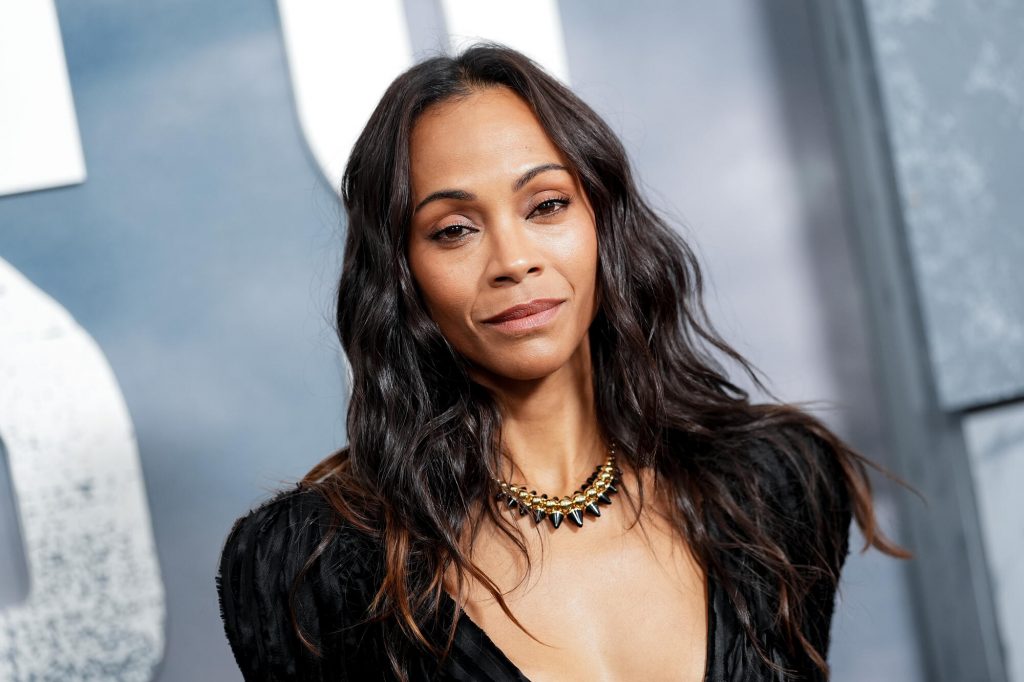
Zoe Saldaña Wants to Talk About the Work
Zoe Saldaña has spent much of her career moving between some of the biggest worlds Hollywood has created: from Avatar to Guardians of the Galaxy, from Star Trek to the award-winning musical drama Emilia Pérez. Yet at a recent appearance at the Locarno Film Festival, the Oscar-winning actress made it clear that there is one subject she would sometimes rather discuss before anything else: the craft of acting.
Saldaña’s comments were not about refusing difficult conversations altogether. Instead, she questioned why certain questions seem to follow her so persistently—particularly when she appears on panels or participates in public conversations about her work.
According to reporting from the festival, Saldaña said she often attends Q&As because she genuinely wants to talk about acting. She wants to discuss performance, characters, preparation and the creative process. Yet she said that when she is the only woman or the only person of color on a stage, she frequently finds herself waiting for a question about her craft before being asked a political or industry-wide question instead. :contentReference[oaicite:0]{index=0}
“I wait for my turn to be asked a question about my craft.”
The Question Behind the Question
Saldaña offered an example of the kind of question she receives: what does the industry need to do to make films more inclusive?
Her response was essentially a question of her own. Why should the person who happens to be the only representative of a particular background in the room automatically become the person responsible for answering for the entire industry?
It is an interesting distinction.
There is a difference between asking an actor about a subject that genuinely informs a particular performance and asking that actor to become a spokesperson for an enormous cultural conversation simply because of who they are.
Saldaña’s point, as reported from Locarno, was that responsibility for structural change belongs with the people who have the power to make decisions—the industry’s gatekeepers—not simply with the performers who are invited into the room. :contentReference[oaicite:1]{index=1}
Saldaña’s remarks raise a question about celebrity interviews themselves: when does an artist’s identity become more interesting to the interviewer than the art that brought the artist into the room?
An Actress Who Has Spent Decades Reinventing Herself
Saldaña has earned the unusual distinction of becoming one of the most commercially successful performers in modern cinema while repeatedly taking on characters that require radically different physical and emotional approaches.
Her résumé includes the Avatar films, the Marvel universe, the Star Trek franchise and James Cameron’s Avatar series. Her films have collectively generated billions of dollars at the worldwide box office, making her one of the most commercially successful actors in film history.
Yet commercial success has not defined the entire trajectory of her career.
Her performance in Emilia Pérez introduced audiences to another side of her abilities. The role demanded singing, dancing, dramatic intensity and an unusually complicated emotional register.
The film became one of the most talked-about movies of awards season, and Saldaña ultimately won the Academy Award for Best Supporting Actress for her performance.
When the Work Becomes Secondary
The timing of Saldaña’s comments is significant because Emilia Pérez became surrounded by controversy during its awards campaign.
Questions about the film’s depiction of Mexico, its themes and controversy surrounding co-star Karla Sofía Gascón frequently became part of the conversation around Saldaña’s performance.
Saldaña has previously addressed those issues publicly, including a tense exchange with a Mexican reporter at the Oscars concerning the film’s portrayal of Mexico. She expressed regret that people felt offended while maintaining that the filmmakers had approached the project from a place of love. :contentReference[oaicite:2]{index=2}
That history helps explain why the actress might be particularly sensitive to the distinction between discussing the work and repeatedly being asked to defend or explain the larger cultural conversation surrounding it.
An actor can participate in a complicated film without becoming the sole interpreter of every conversation surrounding it.
She Is Not Saying the Questions Should Never Be Asked
There is an important nuance in Saldaña’s position.
She has not built a career around avoiding difficult subjects. Her filmography includes stories involving immigration, identity, violence, displacement and cultural conflict.
In The Absence of Eden, for example, she played an undocumented immigrant in a film directed by her husband, Marco Perego. The project dealt with immigration, but Saldaña and Perego emphasized the human dimension of the story rather than presenting it as a political argument. :contentReference[oaicite:3]{index=3}
That distinction is important because art can examine political or social subjects without reducing the artist to a political spokesperson.
The Actress Behind the Headlines
Saldaña’s career began long before she became an awards-season headline.
She studied dance in her youth and later moved toward acting. That background has remained an important part of the way she approaches performance. In interviews, she has described physicality, movement and the body’s relationship to a character as central to her creative process.
She has also spoken about wanting to expand her creative responsibilities beyond simply appearing in front of the camera. In recent interviews, she has discussed an interest in directing and becoming increasingly involved in the creative decisions behind a production.
That evolution makes her Locarno comments especially interesting.
She is not simply an actress asking to be asked about acting. She is an artist whose understanding of filmmaking is becoming broader with every stage of her career.
Let the Artist Be an Artist
There is a temptation in modern celebrity culture to turn every public figure into a representative of something larger.
An actor becomes a spokesperson. A musician becomes a political commentator. A fashion designer becomes an authority on culture. A director becomes responsible for explaining an entire industry’s history.
Sometimes those conversations are necessary.
But sometimes an artist simply wants to talk about the thing they spent years learning how to do.
For Saldaña, that means acting.
It means talking about how a character is built, how an emotion is reached, how movement changes a performance, how a scene works and what happens when an actor has to surrender themselves to another person’s story.
Those questions may sound less explosive than politics, but they are arguably closer to the reason the audience came to see the film in the first place.
A Different Kind of Conversation
Perhaps the most interesting takeaway from Saldaña’s remarks is not that political questions should disappear from Hollywood.
It is that the conversation should become more expansive.
Ask the difficult question when it is relevant.
Ask about representation when the subject genuinely connects to the work.
Ask artists how their experiences influence their creative decisions.
But also ask them about their craft.
Ask them what they learned.
Ask them what frightened them about a role.
Ask them what they would do differently.
Ask them why a particular scene matters.
Those questions can reveal something politics cannot: the person behind the performance.
The Maison Adoré Perspective
Zoe Saldaña’s comments arrive at an interesting moment in her career. She is no longer simply the young actress trying to establish herself. She is an Oscar winner, a global box-office force and an increasingly experienced creative voice.
Perhaps that is why her frustration carries weight.
After spending decades proving that she can inhabit extraordinary characters, perhaps she deserves the opportunity to talk about how she actually does it.
There is room for both conversations.
There is room for questions about culture, representation and the industry.
And there is room for the artist to simply talk about the art.
Sometimes the most revealing question is not what an actor thinks about the world.
It is what the actor discovered while becoming someone else.
The spotlight may belong to the star, but the story belongs to the art.
— Maison Adoré