Gina Prince-Bythewood brings Tomi Adeyemi’s magical world of Orïsha to the screen in an ambitious new fantasy epic.
Film & TV • Fantasy • 6 Min Read
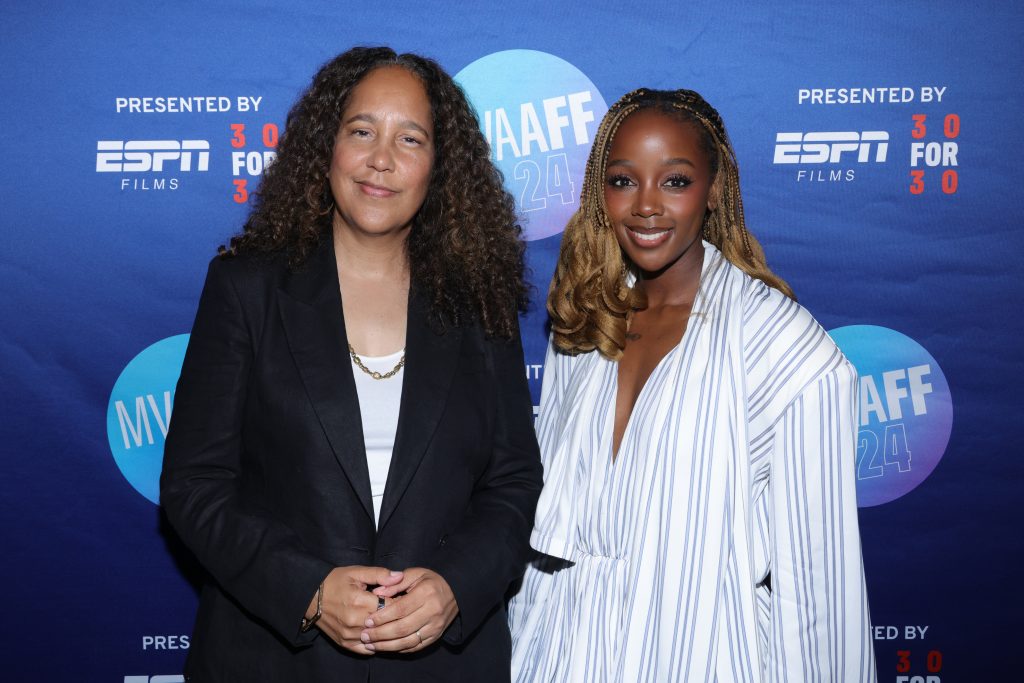
Gina Prince-Bythewood brings the magical kingdom of Orïsha from Tomi Adeyemi’s bestselling novel to the big screen.
Bringing a beloved fantasy novel to the screen is never simply a matter of translating words into images. The filmmaker has to build an entire world—its landscapes, cultures, costumes, architecture, mythology, movement, and magic—and make audiences believe that the world existed long before the camera arrived.
For Gina Prince-Bythewood, that challenge became the heart of Children of Blood and Bone, the highly anticipated film adaptation of Tomi Adeyemi’s bestselling 2018 novel.
Prince-Bythewood, the filmmaker behind Love & Basketball, The Old Guard, and The Woman King, has described Adeyemi’s book as a project that immediately inspired her. But turning the story of Orïsha into a cinematic universe required more than reproducing the pages.
It required creating a world that felt culturally specific, emotionally authentic, and enormous enough to carry the story’s mythology.
“How Do We Make Magic Feel Cultural?”
That question sits at the center of Prince-Bythewood’s approach to the film.
Rather than creating another fantasy universe modeled primarily on European traditions, the filmmaker wanted Orïsha to feel deeply connected to African cultures while remaining its own fictional place.
The story draws inspiration from Nigeria and the wider African diaspora, while building an original mythology around magic, oppression, identity, and resistance.
Prince-Bythewood has described the film as a celebration of the Black diaspora, extending that vision beyond the characters and into the production design, costumes, choreography, action, music, and landscapes. :contentReference[oaicite:0]{index=0}
The goal was not simply to show magic. It was to make the magic feel as though it belonged to the world.
Building Orïsha
In Adeyemi’s story, Orïsha is a fictional kingdom shaped by a history in which magic has been violently suppressed. Zélie Adebola, a young divîner with dormant magical abilities, becomes central to the struggle to restore magic to her people.
That premise gives the film an unusually expansive visual assignment. The filmmakers are not simply constructing a fantasy kingdom. They are creating a society with its own history, class structures, spiritual traditions, political conflicts, and relationship to magic.
Production designer Hannah Beachler, whose work on Black Panther helped establish one of modern cinema’s most influential Afrofuturist visual worlds, is part of that process.
The result is intended to feel expansive without losing its connection to the human beings living inside it.
Real Landscapes, Real Scale
Prince-Bythewood and her team made a deliberate decision to use real landscapes rather than relying primarily on green-screen environments.
Production took the cast and crew to South Africa and the Canary Islands, where the natural environments could provide the scale and texture necessary to make Orïsha feel physical. The locations were not simply backgrounds. They became part of the storytelling.
That approach comes with a price. Remote locations can be physically demanding, requiring long journeys and difficult working conditions. Prince-Bythewood has spoken about those challenges while emphasizing how important the environments were to the finished film. :contentReference[oaicite:1]{index=1}
For a fantasy film, the temptation is often to create everything digitally. Here, the filmmakers wanted audiences to feel the ground beneath the characters’ feet.
Tomi Adeyemi’s Blueprint
For Prince-Bythewood, Adeyemi’s novel remained the foundation.
The director has described the book as the “Bible” for the film—not a literal blueprint, but the source containing the reason audiences originally fell in love with the story. :contentReference[oaicite:2]{index=2}
That distinction matters. Adaptation requires change. A novel can spend hundreds of pages inside a character’s thoughts, build history through exposition, or move between locations without the logistical limitations of a film production.
Cinema has to communicate much of that information visually.
The challenge is preserving the emotional DNA of the original while creating a cinematic language of its own.
Prince-Bythewood Calls Adeyemi a Genius
Prince-Bythewood has spoken with enormous admiration about Adeyemi and the world she created.
The director’s praise goes beyond the success of the novel. What she recognizes is the scale of Adeyemi’s imagination—the ability to create a fantasy world that feels both accessible and distinct while placing Black characters and African-inspired mythology at the center of an epic story.
Adeyemi’s achievement was particularly significant when Children of Blood and Bone arrived in 2018. The novel became a major bestseller and introduced millions of readers to the world of Orïsha.
The book went on to become the first installment of the Legacy of Orïsha trilogy, followed by Children of Virtue and Vengeance and Children of Anguish and Anarchy. :contentReference[oaicite:3]{index=3}
A World Filled With Movement
Worldbuilding extends beyond sets and landscapes.
It exists in the way people move, fight, dress, speak, worship, and interact with one another.
The film’s action choreography therefore becomes part of its cultural language. So do the costumes. So does the music. So does the design of the magical elements.
Every component has to communicate something about Orïsha without requiring the audience to stop and receive an explanation.
That is what separates a convincing fantasy world from a collection of impressive images.
A fantasy world becomes believable when every detail appears to have a history.
A New Kind of Epic
The scale of Children of Blood and Bone is significant not only because of its visual ambition, but because of what it represents within mainstream fantasy cinema.
For decades, major fantasy franchises have frequently looked toward European medieval traditions for their visual vocabulary. Orïsha offers another possibility.
Here, Black characters are not supporting figures placed around the edges of an established fantasy mythology. They are the center of the mythology.
That distinction gives the film an importance beyond its spectacle.
The Cast Meets the World
The ensemble reflects the scale of the project. Thuso Mbedu leads the film as Zélie, with Amandla Stenberg, Tosin Cole, Damson Idris, Cynthia Erivo, Regina King, Idris Elba, Viola Davis, Chiwetel Ejiofor, and Lashana Lynch among the major cast members. :contentReference[oaicite:4]{index=4}
For the actors, inhabiting Orïsha required more than learning dialogue. The production involved extensive preparation for action sequences and physical performance, helping the cast move through the world with the confidence of people who actually belong there.
That sense of belonging is crucial to Prince-Bythewood’s vision.
The fantasy cannot feel like a costume placed over reality. It has to feel lived in.
Why the World Matters
At its core, Children of Blood and Bone is a story about power—who possesses it, who is denied it, and what happens when people decide they will no longer accept the world as it has been given to them.
That makes the worldbuilding more than visual decoration.
Orïsha’s design carries the history of its people. The landscapes reflect its scale. The costumes communicate identity. The magic represents both possibility and oppression. And the characters move through all of it carrying the weight of generations.
Prince-Bythewood’s challenge is to make all of those elements feel like one world.
Bringing Orïsha to the Big Screen
The first trailer has offered audiences a glimpse of what that ambition looks like. Sweeping landscapes, fantastical creatures, elaborate costumes, supernatural elements, and large-scale action suggest a film designed to feel expansive from its opening frame.
The film is scheduled to arrive in theaters and IMAX on January 15, 2027. :contentReference[oaicite:5]{index=5}
Whether it becomes the beginning of a larger cinematic franchise remains to be seen. But the first challenge has already been met: making Orïsha visible.
And from what the filmmakers have shown so far, they are not treating that responsibility lightly.
A World Waiting to Be Seen
The most exciting thing about Children of Blood and Bone may ultimately be the simple fact that this world exists on this scale at all.
Tomi Adeyemi imagined Orïsha on the page. Gina Prince-Bythewood and her collaborators have taken on the enormous task of giving that imagination physical form.
The landscapes, costumes, choreography, music, performances, creatures, and magic all become pieces of the same cinematic language.
And that is the real promise of this adaptation: not simply another fantasy movie, but the arrival of a world audiences have never quite seen before.