Andrew Lloyd Webber reflects on Broadway’s rising costs as the daring reimagining of Cats takes its final bow.
Theater • Broadway • 5 Min Read
Ahead of tonight’s final Cats: The Jellicle Ball show, composer Andrew Lloyd Webber is speaking out about how producing on Broadway has become “unsustainable.”
“I’m gutted that the wonderful Broadway production of Cats: The Jellicle Ball is closing today,” Lloyd Webber wrote on Instagram. “I’m immensely proud to have been a part of an incredibly daring …”
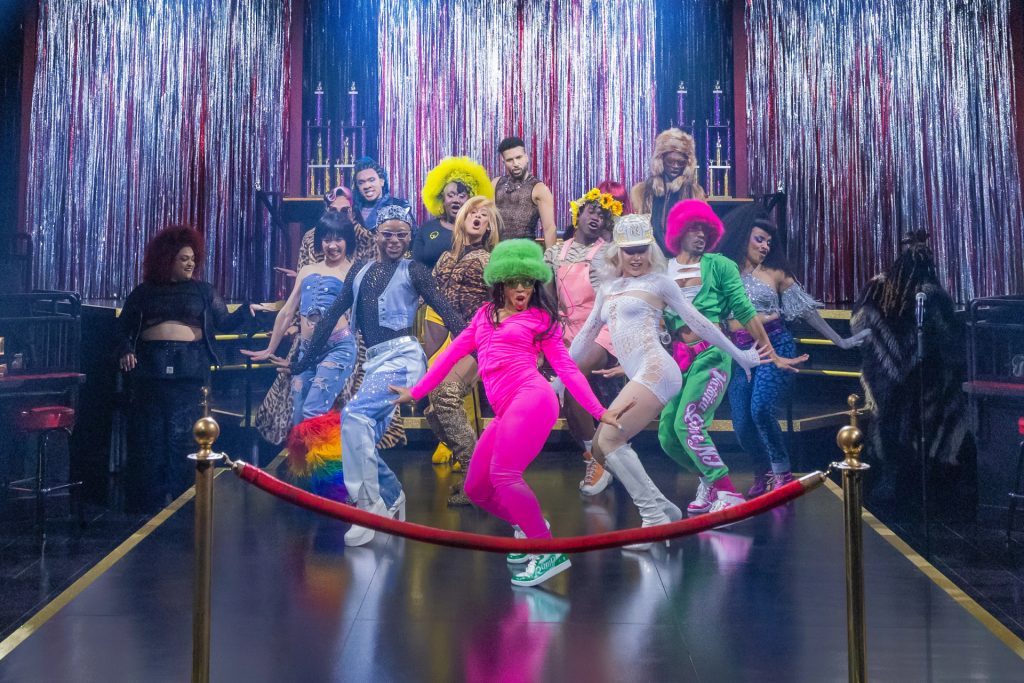
When Cats: The Jellicle Ball took its final bow on Broadway, it left behind something more complicated than a closing-night curtain call. The production had been one of the season’s most adventurous theatrical experiments, transforming Andrew Lloyd Webber’s familiar musical into a vibrant celebration of New York ballroom culture, identity, movement, and community.
And yet, despite the acclaim, the awards, and the attention surrounding the production, the show closed on August 8 after only a few months on Broadway.
For Lloyd Webber, the news was painful not simply because one of his musicals was closing, but because he saw the production as evidence of what Broadway can accomplish when artists are willing to take risks.
In a statement following the closing announcement, Lloyd Webber expressed his sadness over the production ending and used the moment to raise a much larger concern: the economics of producing new work on Broadway.
When Artistic Success Isn’t Enough
Cats: The Jellicle Ball was not a conventional revival.
Instead of reproducing the world audiences already knew, directors Zhailon Levingston and Bill Rauch reimagined the musical through the lens of New York City’s ballroom community. The cats became contestants at a spectacular ballroom event, bringing together voguing, fashion, music, movement, and the theatrical world of Lloyd Webber’s original score.
The result was a production that felt connected to Broadway history while simultaneously challenging the audience’s expectations of what a Broadway revival could be.
Critics and theatergoers responded strongly. The production ultimately won three Tony Awards, recognizing its direction, choreography, and costume design.
A production can win the room creatively and still struggle to survive financially.
The Broadway Problem
Lloyd Webber’s warning goes beyond Cats: The Jellicle Ball.
Broadway has become increasingly expensive to produce. Sets, costumes, musicians, performers, theaters, marketing, technology, insurance, rehearsal costs, and the enormous number of people required to keep a large-scale production running all contribute to the financial pressure.
That creates a difficult equation. A production can be critically celebrated and still fail to generate enough revenue to sustain a long commercial run.
According to reporting surrounding the closure, Cats: The Jellicle Ball had been bringing in roughly $1 million a week at points during its run, yet the production had not recovered its reported $18 million investment when the decision was made to close.
The numbers illustrate the problem in stark terms: even a show capable of attracting substantial weekly audiences can face enormous financial hurdles before it reaches profitability.
A Bold Reimagining
What makes the early closing particularly striking is the creative ambition behind the production.
Cats is one of musical theater’s most recognizable titles. Its music is deeply embedded in popular culture, and its original production became an international phenomenon. Reimagining it through ballroom culture could easily have become a superficial exercise.
Instead, The Jellicle Ball treated ballroom as a genuine artistic language.
The production brought performers and creative voices connected to that world into the center of the Broadway stage. Voguing and ballroom competition were not simply visual decorations. They became part of the show’s dramatic vocabulary.
That decision gave an old musical a new social and cultural context while allowing a younger generation of theatergoers to encounter the material from an entirely different perspective.
The Cost of Taking Risks
Broadway has always depended on a certain amount of risk. Every new musical represents a financial gamble, and every revival carries the question of whether audiences will pay to experience something they may already know.
But productions such as The Jellicle Ball raise an even more complicated question: What happens when the most interesting artistic experiments become too expensive to sustain?
If producers become increasingly dependent on recognizable titles, celebrity casting, established franchises, and productions with obvious commercial appeal, the Broadway landscape could become narrower.
The danger is not that Broadway will stop producing successful shows. The danger is that it may become harder for unusual, daring, culturally specific work to survive long enough to find its audience.
More Than a Closing
The final curtain on Cats: The Jellicle Ball therefore represents more than the end of one Broadway engagement.
It becomes part of a larger conversation about what Broadway is capable of producing, who gets the opportunity to tell stories on its stages, and whether the financial structure of commercial theater can support the very experimentation that keeps the art form alive.
There is an undeniable irony in a production being recognized with major awards while simultaneously confronting the realities of an industry in which recognition does not necessarily translate into financial sustainability.
That contradiction may be the most important part of the story.
What Broadway Should Remember
Broadway has survived because it has repeatedly reinvented itself.
The theater district has changed dramatically across generations. Musical styles have changed. Audiences have changed. Technology has changed. The stories being told onstage have changed.
Cats: The Jellicle Ball belonged to that tradition of reinvention.
It took one of the most recognizable musicals in theater history and asked what it could become in another cultural language. It brought ballroom into a Broadway house. It placed performers from a historically underground community at the center of a major commercial production. And it demonstrated that an established title could still become something unexpected.
Its short life on Broadway does not erase that achievement.
The Ball May Be Over
The Jellicle Ball may have left Broadway, but the questions it raised remain.
How much should a Broadway production cost? How long should an ambitious show be expected to survive before it is considered unsuccessful? Can daring theater find an economic model that does not require it to become a guaranteed commercial property before audiences ever see it?
Those questions do not have easy answers.
What is clear is that Cats: The Jellicle Ball gave Broadway something it desperately needs: a reason to look at a familiar piece of theater differently.
Andrew Lloyd Webber’s concern about Broadway’s sustainability may be difficult to hear, but the closing of a critically celebrated, Tony Award-winning production makes the conversation impossible to ignore.
The final performance may have ended the show, but the larger question remains onstage:
What kind of Broadway do we want to build next?