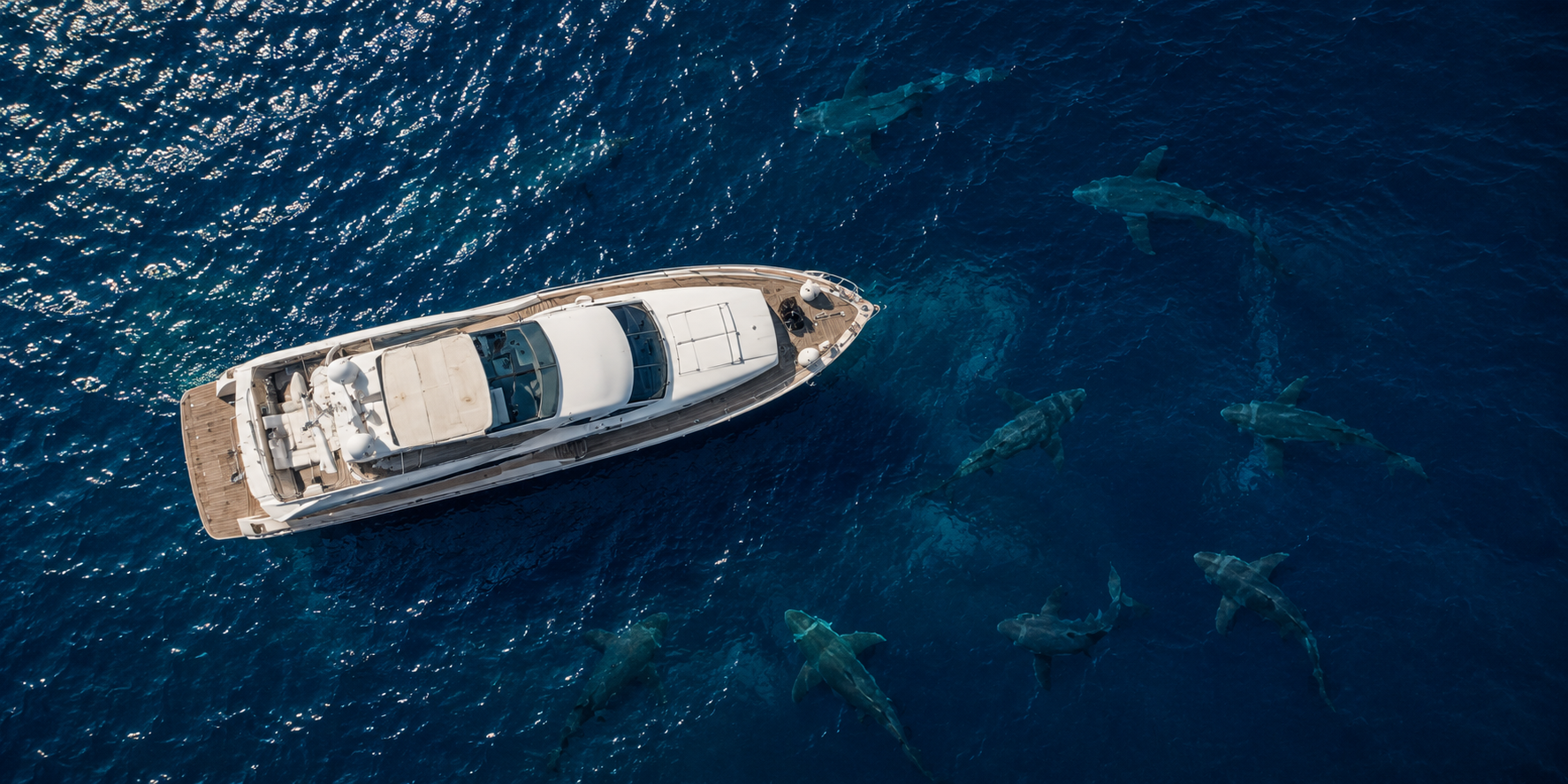
Beneath the Surface
Sometimes the greatest dangers are not the ones beneath the water—but the ones we create in our own minds. A journey through fear, perception, and the psychology of the unknown.
Navigating Risk, Fear, and Perception
The Waters We Fear
On land or at sea, this is the psychological reality of human existence. The sharks beneath our boat are the invisible pressures we carry: the risks we calculate, the anxieties we harbor, and the phantom failures we dread before they ever materialize.
Fear vs. Reality: The Invisible Predators
At its core, fear is an evolutionary alarm system designed to keep us alive, while reality is often far more neutral. When we picture sharks circling our metaphorical boat, our physiological responses spike—heart rate climbs, muscles tense, and focus narrows.
However, psychological research shows a profound mismatch between perceived threats and actual hazards. Most of the sharks we fear in our daily lives—rejection, inadequacy, catastrophic failure—are lurking in the depths of our imagination, not snapping at our heels. We spend vast amounts of cognitive energy bracing for impacts that never arrive.
Risk Perception and Anxiety: Steering by Phantom Waters
Why do we let what we cannot see dictate how we move? The answer lies in risk perception. Our brains are hardwired for negativity bias, meaning we heavily over-weight potential dangers compared to potential rewards.
When anxiety takes the helm, it alters our entire navigation system:
- Paralysis by analysis: We second-guess every turn, anchoring ourselves in place rather than risking open water.
- Hyper-vigilance: We scan the horizon constantly, exhausting our mental resources on threats that may be entirely benign.
- Course distortion: We detour far away from our goals just to avoid waters where we think danger lives.
Success and the Fear of Failure
Curiously, these phantom waters become most crowded just as we approach success. The higher the stakes, the more magnified the shadows beneath the hull appear.
The fear of failure is rarely just about making a mistake; it is the terror of exposure—the dread that the sharks will strike right when everyone is watching. This psychological trap causes many to sabotage their own journeys, preferring the safety of stagnation over the terrifying expanse of potential achievement. We stay anchored because staying still feels safer than risking a breach.
Navigating Beyond the Shadows
The ultimate psychological insight of the open water is this: The greatest threats are rarely the ones biting us; they are the ones we invent.