A New Orleans Juneteenth celebration becomes a powerful meeting point for Black culture, heart health, wellness and community care.
Culture & Lifestyle · Health & Community · New Orleans
In New Orleans, Juneteenth is becoming a space not only for cultural celebration, but for wellness, access and community care.
How the Black Heart Association Is Bringing Heart Health and Community Care to New Orleans
Culture & Lifestyle | Health & Community | Maison Adoré
In New Orleans, celebrations of Black freedom have long been rooted in culture, connection and the simple act of showing up for one another. In 2026, that spirit of service took on another dimension during the city’s Juneteenth celebrations, as the Black Heart Association brought cardiovascular education, screenings and wellness resources directly into the community.
The organization’s New Orleans appearance was part of its broader Guard Your Heart tour, a national initiative focused on bringing heart-health education and screening opportunities into communities where access to preventive care can be limited. The organization listed New Orleans as one of its June 2026 tour stops. Explore the Black Heart Association’s Guard Your Heart Tour .
For BHA, the message is straightforward: heart health belongs in the middle of community life, not only inside a doctor’s office.
Freedom, Culture and a Broader Definition of Wellness
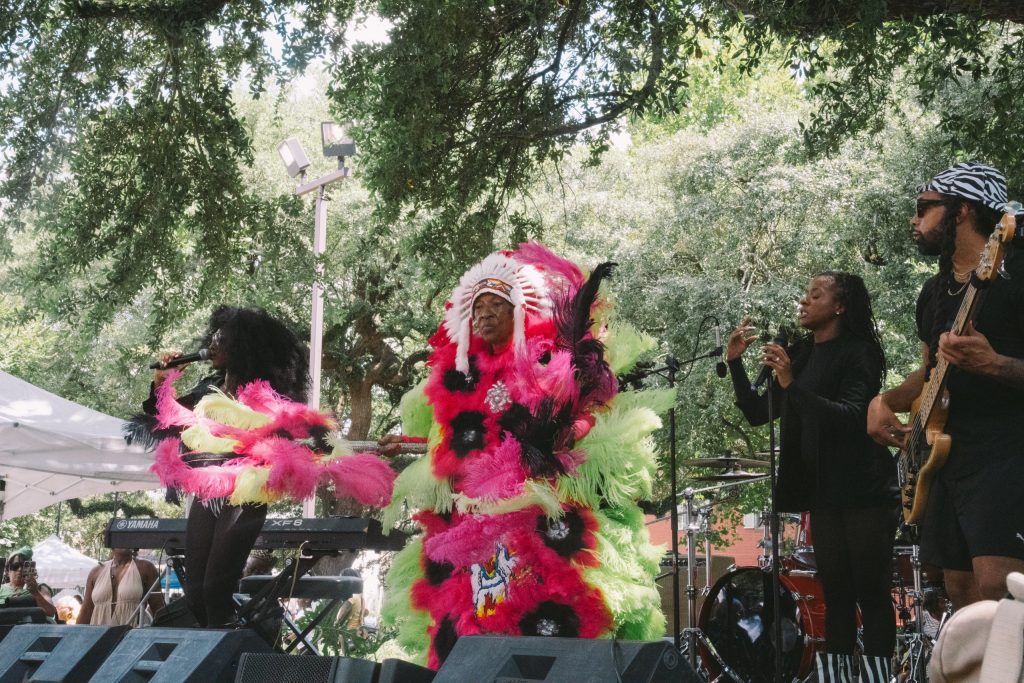
The New Orleans Juneteenth Festival has become a cultural gathering where music, dance, food, art, commerce and history meet. The festival began in 2020 and was created to examine what liberation means within the Black community while also promoting unity, cooperative economics, wellness and community development.
That mission makes health education a natural part of the celebration.
Shaddai Livingston, founder and executive director of the Louisiana Afro-Indigenous Society, the organization behind the festival, has described the event as an opportunity to revisit traditions through a more holistic lens. In her view, honoring the past can also mean asking how those traditions can help communities become healthier and stronger in the present.
“New Orleans is a place that never forgets,” Livingston says. She describes the city’s traditions as carrying both beauty and histories of trauma, making it important to continually reassess how those traditions are carried forward.
The result is a version of Juneteenth that does not separate celebration from care.
Instead, the two exist side by side.
Congo Square and the Meaning of Freedom
The setting matters.
The 2026 New Orleans Juneteenth Festival took place at Armstrong Park and Congo Square, a location whose cultural history reaches deep into New Orleans’ Black and African-diasporic traditions. The festival’s organizers describe Congo Square as a place where enslaved people historically gathered, exchanged goods, maintained cultural practices and expressed themselves through music and dance.
Livingston connects the festival directly to that history.
“Armstrong Park which was built around an old plot of land called Congo Square,” she explains. “Congo Square was the place where indigenous people would gather and trade goods, but it was also where the enslaved were allowed to speak their native tongue, sell goods to purchase their freedom, play African drums and perform dances, such as the Bamboula, on Sundays.”
The festival’s organizers have embraced that history by transforming the park into what they call Freedomville—a living celebration of culture, creativity and collective liberation.
The 2026 festival included music, dance, Black-owned vendors, community resources and other programming in and around Congo Square. The organizers also expanded the weekend with an economic summit and freedom gala.
Visit the New Orleans Juneteenth Festival to explore its community programming and history.
Health Equity Belongs in the Celebration
That setting gives BHA’s work a particular significance.
The Black Heart Association is a nonprofit organization focused on improving cardiovascular health through advocacy, education and direct community engagement. The organization says its mission is particularly focused on communities where heart disease has gone unaddressed and undetected for generations.
Its approach is intentionally practical. Rather than waiting for people to find a healthcare setting, BHA brings information and screening opportunities into places where people are already gathering.
Its current national work includes the Guard Your Heart tour, community screenings and educational programming. The organization also operates CARDI V, its mobile health-screening initiative, which it promotes as a way to bring free cardiovascular screening into communities.
Learn more about the Black Heart Association and its heart-health programs.
The philosophy is simple: prevention becomes more powerful when it is accessible.
Taking Screening Out Into the Community
A festival environment might seem like an unusual place to talk about cardiovascular health, but that is exactly what makes the strategy so effective.
People come to Juneteenth to celebrate. They come for music, food, family, history and connection. A health screening can become part of that experience instead of feeling like another appointment that has to be scheduled, traveled to and remembered.
BHA has made this kind of community-based engagement a central part of its work. Its public events page highlights heart-health screenings, education and community programs designed to meet people where they are.
Explore upcoming Black Heart Association events .
That model also changes the tone of the conversation. Health is not presented as something frightening or corrective. It becomes part of taking care of yourself, your family and the people around you.
A Community Already Built Around Connection
The New Orleans Juneteenth Festival itself is designed around participation.
For years, the celebration has created a platform for local performers, artists, vendors, speakers and community organizations. The atmosphere moves naturally between cultural expression and practical community resources.
Snowball stands sit alongside live music. African dance shares space with vendors and educational programming. Children and families move through the park while performers and speakers create a larger narrative about freedom and identity.
The point is not simply to watch.
It is to participate.
That participatory spirit is also what allows organizations such as BHA to make health information feel less distant and more personal.
Why the Youngest Visitors Matter
For younger attendees, Juneteenth can be an introduction to history and culture that feels immediate rather than academic.
For adults, it can become an opportunity to think differently about what freedom means in everyday life.
And for families, a public health component adds another layer: the understanding that protecting the future also means paying attention to health in the present.
That is particularly important when conversations about health are passed from one generation to another.
Preventive care can become a family habit.
Learning what blood pressure numbers mean can become normal.
Knowing your cardiovascular risk can become part of the same culture of care that already includes food, music, family and tradition.
Lena Came South for the Experience
For Lena Jones, 25, who traveled from New York City, the festival represented something she could not fully experience from home.
“I just wanted to embrace the meaning of Juneteenth,” she says. “I’ve never gone to a Juneteenth festival…we have them in New York, but I felt like I had to go down south to really experience the culture because the importance of it isn’t recognized in certain places.”
Her experience speaks to another important part of the New Orleans celebration: place matters.
There is something different about celebrating Juneteenth in a city where African, Caribbean, Indigenous and Black American histories are woven into the physical landscape.
Congo Square is not simply a backdrop.
It is part of the story.
Breaking the Pattern Through Community Care
The deeper connection between Juneteenth and cardiovascular health is the idea that freedom is not only historical. It is also lived.
Freedom can mean access to information.
It can mean knowing what is happening inside your own body.
It can mean having someone explain a health risk in language that feels understandable.
It can mean being surrounded by people who encourage you to take care of yourself before a crisis forces you to.
The Black Heart Association’s model is built around that kind of proactive engagement. Its mission is to close gaps in prevention, screening and care by connecting communities with information and services.
That makes a festival an unexpectedly powerful place for health advocacy.
People are already gathered.
They are already listening.
They are already thinking about community.
The health conversation simply becomes another part of that community.
From Celebration to Action
The 2026 New Orleans Juneteenth Festival illustrated how cultural celebration can become a platform for practical action. The event remained rooted in music, history, Black creativity and collective joy, while organizations like the Black Heart Association added another dimension: the possibility of leaving the celebration with something that could affect your life long after the music stopped.
That is a powerful evolution of the festival model.
You can celebrate freedom and still ask what freedom looks like when it comes to health.
You can honor the past while creating better habits for the future.
And you can turn a cultural gathering into a place where knowledge, care and community move together.
Celebration remembers where we came from.
Community care asks how we want to live forward.
EXPLORE THE COMMUNITY
Learn More
Discover the organizations and community initiatives helping connect culture, wellness and opportunity in New Orleans and beyond.
Black Heart Association NOLA Juneteenth Festival Louisiana Afro-Indigenous Society
Maison Adoré
Culture & Lifestyle · Community · Wellness · New Orleans