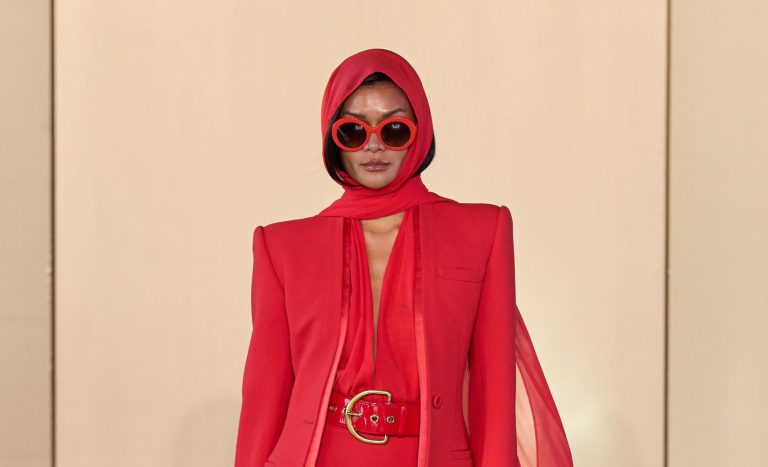
A poetic study in memory, craftsmanship, natural color, and the beauty of making something by hand.
Fashion • Fall 2026 Ready-to-Wear • 5 Min Read
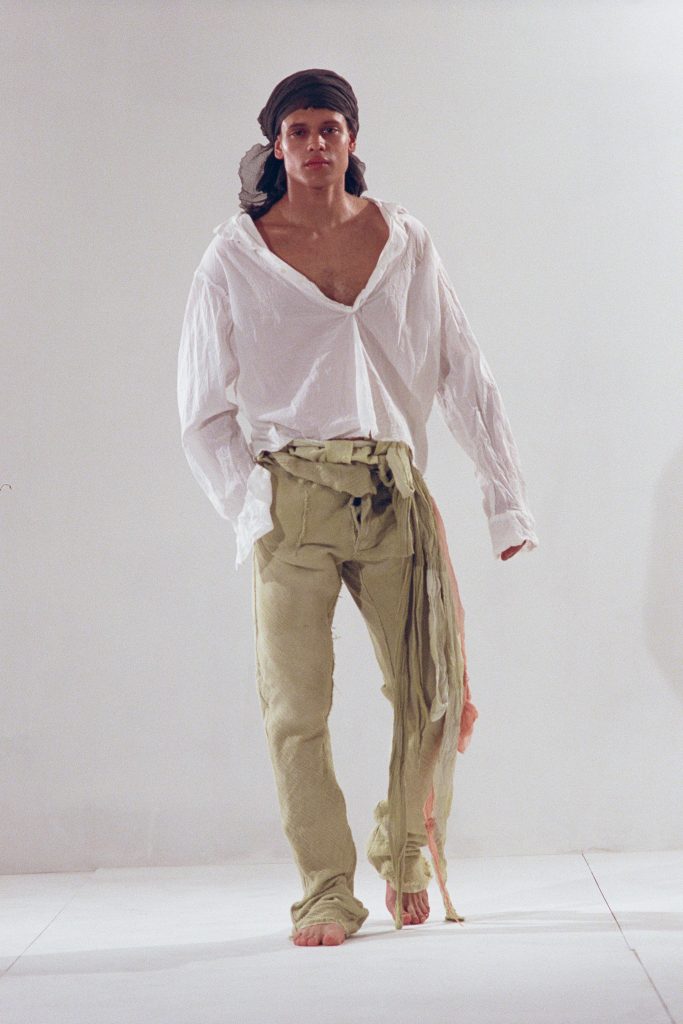
Paolo Carzana
Fall 2026 Ready-to-Wear
A poetic feast of hand-dyed cloth, family memory, Italian tradition, and the beauty of making something extraordinary from what is already at hand.
Paolo Carzana has never treated fashion as something that begins and ends with a garment. His work is rooted in touch, memory, nature, craft, and the emotional history carried by the hands that make it.
For Fall 2026, that philosophy found an unexpectedly intimate expression in Il Risotto—a collection inspired by a childhood memory of learning to make risotto with his aunt.
The concept sounds simple. The result is anything but. Carzana transformed the familiar language of a family kitchen into a collection built around natural dyeing, raw-edged fabrics, fragile silhouettes, and an almost theatrical sense of storytelling.
A Collection Served Like a Story
Carzana described the collection as a cookbook rather than a traditional lookbook. The metaphor is revealing. Each garment becomes an ingredient, each color a flavor, and the entire collection a recipe assembled through instinct, memory, and whatever materials happen to be available.
That philosophy connects directly to the Italian idea of cucina povera—the tradition of creating deeply satisfying food from simple ingredients and making the most of what is already there.
For Carzana, the idea becomes a philosophy of fashion: limitation does not have to mean scarcity of imagination. In fact, limitation can force creativity into sharper focus.
Sometimes the most beautiful things begin with whatever is already within reach.
The Palette of a Kitchen
Color becomes one of the collection’s most distinctive storytelling devices. Rather than presenting a single uniform palette, Carzana allowed each Dover Street Market location to develop its own interpretation.
London received tomato, squid ink, and butter. Paris selected lemon, cavolo viola, and walnut. New York leaned toward butter, prosciutto, saffron, and gorgonzola, while Los Angeles chose butter, gorgonzola, mushroom, and squid ink.
The result is a collection that feels almost edible in its imagination. The colors carry associations with ingredients, kitchens, family meals, and the sensory experience of food without becoming literal costume.
The Art of the Hand
At the center of Carzana’s practice is an extraordinary commitment to handwork. The fabrics are organically dyed, and the process of creating their colors is as important to the collection as the garments themselves.
Raw-edged cotton, peace silk, and georgette form the foundation. Natural dyes are manipulated through techniques such as mordanting, while different fibers react to color in their own distinctive ways.
The result is not the perfectly predictable color of industrial production. It is something more alive—shades that shift, deepen, soften, and change according to the material receiving them.
That imperfection is precisely the point. Each piece carries evidence of the process that created it.
Fragility as Strength
Carzana’s silhouettes have a delicacy that can initially appear almost fragile. Bias-cut dresses, his signature “Open Heart” shirts, and pieced-together trousers create a wardrobe that feels assembled rather than manufactured.
But there is strength in that delicacy.
The garments refuse the idea that sustainability must look austere or that ethical fashion has to sacrifice beauty. Instead, Carzana demonstrates how ecological responsibility and emotional richness can coexist.
The clothing feels touched by its maker—and that human presence becomes part of its value.
From Family Memory to Fashion
The emotional center of Il Risotto is its connection to Carzana’s family history. His childhood memory of cooking with his aunt becomes a bridge between food, heritage, creativity, and clothing.
Carzana was born in Cardiff to a Welsh mother and a father whose family roots trace back to Italy’s Piedmont region. His grandfather eventually became head waiter at London’s Café Royal, adding another layer to the collection’s relationship with restaurants, service, memory, and fantasy.
In Carzana’s imagination, the male models become waiters serving one remarkable woman: his auntie.
Suddenly, the collection is no longer simply about clothes. It becomes a family story translated into fashion.
A New Chapter for Carzana
There is also something significant about where Paolo Carzana finds himself now. After years of developing his practice with support from scholarships, NEWGEN grants, and London studio initiatives, the designer is reaching a new stage of independence.
The Fall 2026 collection represents his largest production run to date, with the collection reaching Dover Street Market stores across London, Paris, New York, Los Angeles, and Tokyo.
It is an important transition for a designer whose work has always depended on the belief that craftsmanship, sustainability, and imagination can exist together.
What began with hand-dyed fabrics and a deeply personal studio practice is now reaching an international audience without abandoning the principles that shaped it.
Paolo Carzana Fall 2026
Il Risotto is a collection about making something special from what is available. It is about family, resourcefulness, craftsmanship, and the unexpected beauty that emerges when limitations become invitations to create.
Its colors borrow from the kitchen. Its silhouettes carry the delicacy of handmade objects. Its materials preserve the evidence of the dyeing process. And its story reaches back into Carzana’s childhood while moving decisively toward the future.
In an industry that can sometimes become obsessed with speed and constant novelty, Carzana offers something slower and more intimate: the reminder that fashion can still be made with patience, memory, and human hands.
And perhaps that is the real feast.
Post Content